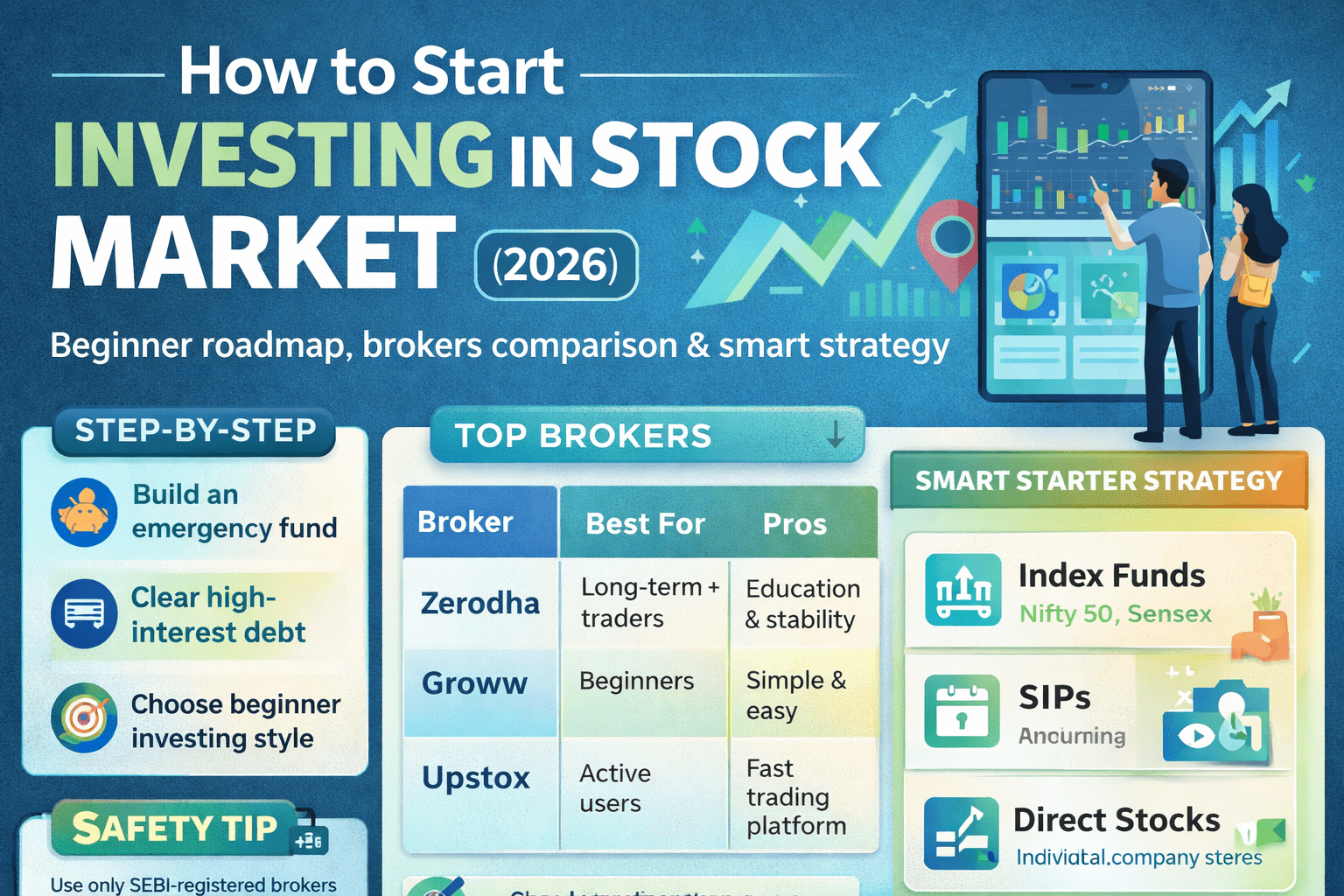
How to Start Investing in Stock Market (Beginner Guide India 2026)
How to start investing in stock market is one of the most important financial skills you can learn in 2026.
With rising inflation and increasing living costs, simply keeping money in a savings account is not enough.
If you want long-term wealth creation, learning how to invest properly in equities is essential.
This beginner-friendly guide explains how to start investing in stock market step by step —
including opening a demat account, choosing the right broker, using SIP strategy,
understanding index funds, and avoiding common mistakes.
Why Learning How to Start Investing in Stock Market Matters
Savings accounts typically offer 3–4% returns. Inflation often runs higher than that.
This means your money slowly loses purchasing power.
Historically, stock markets have delivered better long-term returns compared to fixed deposits.
While markets fluctuate in the short term, disciplined and long-term investing
helps build wealth through compounding.
Step-by-Step: How to Start Investing in Stock Market in India
Step 1: Open a Demat and Trading Account
- Demat Account – holds your shares
- Trading Account – allows buying and selling
- Bank Account – linked for transactions
Step 2: Complete KYC
PAN card, Aadhaar, bank proof, and video verification are generally required.
Step 3: Start Small and Invest Consistently
Start with a small amount like ₹1,000–₹5,000 per month.
The goal is to build discipline, not chase quick profits.
Best Beginner Investment Options
1. Index Funds
Index funds track market indices like Nifty 50 or Sensex.
They are low-cost, diversified, and ideal for beginners.
2. SIP (Systematic Investment Plan)
SIP allows you to invest a fixed amount every month.
This reduces timing risk and builds long-term wealth gradually.
3. Blue-Chip Stocks
Large established companies with strong track records.
They are relatively more stable than small-cap speculative stocks.
Top Brokers for Beginners (India 2026)
| Broker | Best For | Strength |
|---|---|---|
| Zerodha | Long-term investors | Stable platform + education |
| Groww | Beginners | Simple interface |
| Upstox | Active users | Fast trading platform |
Risk Management Rules
- Never invest emergency funds
- Diversify investments
- Avoid penny stocks
- Think long term (5+ years)
- Ignore short-term market noise
Real Example: Investing ₹5,000 Per Month
If you invest ₹5,000 monthly in an index fund through SIP,
and the market delivers around 12% annual return over long term,
your investment can grow significantly due to compounding.
Consistency matters more than timing.
This is how to start investing in stock market responsibly —
with patience, discipline, and long-term thinking.
Common Beginner Mistakes
- Following social media tips blindly
- Panic selling during market correction
- Trying to time the market
- Overtrading
How to Start Investing in Stock Market: Quick Safety Checklist
If you are learning how to start investing in stock market, this checklist will protect you from 90% of beginner mistakes.
Use it before you invest your first ₹1,000.
- Use only SEBI-registered brokers and avoid Telegram/WhatsApp “guaranteed profit” groups.
- Never invest emergency money. Keep 3–6 months expenses separate.
- Start with index funds or diversified large-cap options if you are a beginner.
- Invest monthly instead of lump sum if you feel unsure.
- Track your spending so your SIP stays consistent even during busy months.
Two simple external resources (DoFollow links)
For official investor safety and rules, always check:
Related guides on Credit Guide India (Internal Links)
If you want to improve your financial foundation before investing, read these:
-
Credit Card Fees & Charges in India 2026
-
Personal Loan Interest Rates India 2026
-
Best Fuel Credit Cards India 2026
Once you understand these basics, how to start investing in stock market becomes much easier — because your money habits become stronger.
Final Thoughts
Understanding how to start investing in stock market is not about quick profits.
It is about building a long-term wealth strategy.
Start small, stay consistent, and let compounding work over time.