Credit Card Fees Charges in India 2026 – Complete Guide to Interest, Hidden Costs & Bank Charges
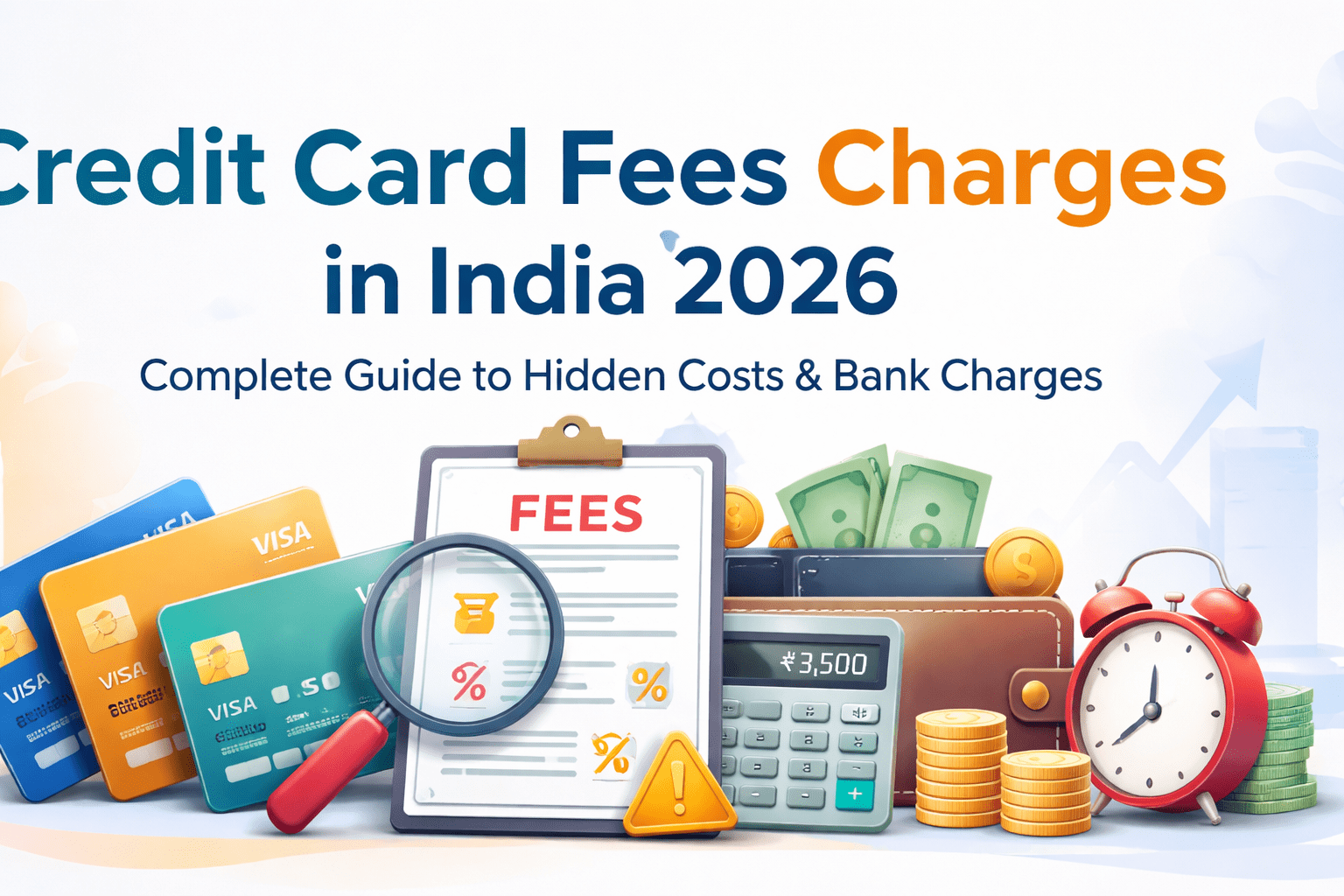
Credit card fees charges in India 2026 are something every cardholder must understand before choosing or using a credit card.
Most people look at cashback, reward points, lounge access and travel benefits.
Very few look at the charges.
But here’s the truth: banks don’t earn from rewards. They earn from fees and interest.
This guide explains every major and hidden charge in simple language — so you can use your credit card smartly without losing money.
Why Understanding Credit Card Fees in 2026 is Critical
In India, credit card usage has grown massively. Millions of new users are applying every year.
But most new users don’t fully understand how interest works or how small fees add up.
Even one missed payment can:
- Trigger late fee
- Add high interest
- Reduce your CIBIL score
- Increase future loan cost
If you’re new to credit cards, also read:
How to Improve CIBIL Score Fast
Complete Comparison Table – Credit Card Fees Charges in India 2026
| Fee Type | Typical Range (India 2026) | When It Applies | Can You Avoid It? |
|---|---|---|---|
| Annual Fee | ₹0 – ₹12,500+ | Yearly renewal | Yes (spend waiver) |
| Interest Charges | 30% – 42% annually | Unpaid balance | Yes (pay full dues) |
| Late Payment Fee | ₹100 – ₹1,300+ | Missed due date | Yes |
| Forex Markup | 2% – 3.5% | International transactions | Choose low-forex card |
| Cash Advance Fee | 2.5% – 3% | ATM withdrawal | Avoid cash withdrawal |
| Overlimit Fee | 2.5% of excess | Exceeding credit limit | Yes |
| EMI Processing Fee | 1% – 3% | Converting to EMI | Sometimes |
Major Credit Card Fees Explained
1️⃣ Annual Fee
Some cards are lifetime free.
Others charge yearly fees.
Premium cards justify high fees with lounge access and rewards.
For example:
Best Travel Credit Cards in India 2026
Always check if fee waiver is available after yearly spending.
2️⃣ Interest Charges (The Biggest Cost)
This is the most dangerous charge in credit card fees charges in India 2026.
If you pay only minimum due, interest applies on entire outstanding.
And new purchases may not get interest-free period.
Interest compounds monthly.
That’s how debt snowballs.
3️⃣ Late Payment Charges
Missing payment triggers:
- Late fee
- GST
- Interest
- Credit score damage
Solution: Enable auto-debit.
4️⃣ Forex Markup
International transactions include currency conversion charges.
Standard cards charge 2–3.5%.
Frequent travellers should compare forex benefits carefully.
5️⃣ Cash Advance Charges
Withdrawing cash using credit card:
- Instant interest
- High transaction fee
Avoid unless emergency.
Hidden Charges Banks Don’t Tell You Clearly
🔹 Minimum Due Trap
Paying only minimum due keeps account “active” but interest keeps growing.
🔹 GST on Fees
Almost every fee has GST added.
🔹 Dynamic Currency Conversion
When paying abroad, merchant may offer INR billing.
This often costs more.
🔹 Reward Redemption Fees
Some banks charge small fee when redeeming points.
🔹 Card Replacement Fee
Lost card replacement may cost ₹100–₹300.
How to Avoid Most Credit Card Fees
- Always pay full amount before due date
- Stay under 30% credit utilisation
- Don’t withdraw cash
- Check forex markup before international use
- Choose right card for spending type
If fuel is your biggest expense, compare:
Best Fuel Credit Cards in India 2026
Are Credit Card Fees Regulated?
Yes. Credit card operations in India are regulated by
Reserve Bank of India (RBI).
Payment networks such as
Visa
and
Mastercard
set transaction standards.
Final Thoughts
Understanding credit card fees charges in India 2026 protects you from unnecessary losses.
A credit card can either:
- Help build credit
- Earn rewards
- Save money
Or it can create debt.
The difference is not the card.
It’s how you use it.