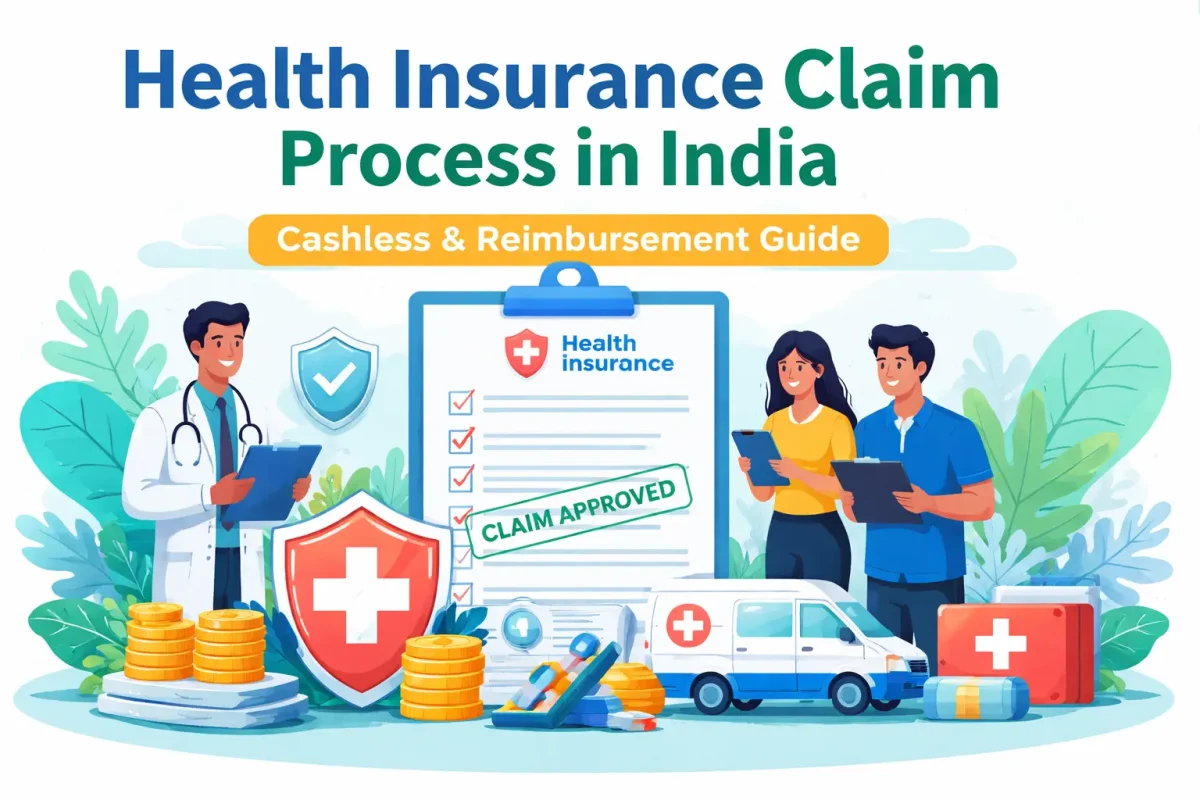
Health Insurance Claim Process in India: Easy Guide to Cashless & Reimbursement Claims (2026)
Understanding the health insurance claim process in India is essential for every policyholder. Many people buy health insurance but feel confused when it comes time to file a claim. Knowing how the claim process works can help you avoid delays, document errors, and claim rejection.
Health insurance claims generally fall into two categories: cashless claims and reimbursement claims. Both processes are designed to help policyholders cover medical expenses during hospitalization, but the steps involved can differ slightly.
In this detailed guide, we explain the health insurance claim process in India, the documents required, differences between claim types, and tips to ensure your insurance claim is approved smoothly.
If you want to understand the health insurance claim process in India clearly, it is important to know when to inform your insurer, which documents to collect, and how cashless and reimbursement claims work in real situations.
What Is a Health Insurance Claim?
A health insurance claim is a request made by the policyholder to the insurance company asking them to pay for medical expenses covered under the policy. When a person receives medical treatment or is hospitalized, they can submit a claim to their insurer for financial coverage according to the policy terms.
Health insurance claims allow policyholders to receive financial protection against rising healthcare costs. Without insurance, medical treatments can become extremely expensive.
You can explore coverage options in our guide:
Best Health Insurance Plans in India.
Types of Health Insurance Claims in India
There are two primary ways to file a health insurance claim in India.
1. Cashless Claim
A cashless health insurance claim allows policyholders to receive treatment without paying hospital bills upfront, provided the hospital is part of the insurer’s network.
In this process, the hospital directly settles the bill with the insurance company.
2. Reimbursement Claim
A reimbursement claim occurs when the policyholder pays the hospital bills first and then submits documents to the insurer to receive reimbursement later.
This method is commonly used when treatment is taken at a non-network hospital.
Cashless Health Insurance Claim Process
Cashless claims are generally simpler and more convenient for policyholders.
The health insurance claim process in India becomes much easier when you use a network hospital because the insurer and hospital coordinate directly for claim settlement.
Step 1: Choose a Network Hospital
Before hospitalization, check whether the hospital is included in your insurer’s network list.
Step 2: Inform the Insurance Company
You should notify the insurance company or Third Party Administrator (TPA) before planned hospitalization. In emergencies, notification should be given within 24 hours.
Step 3: Fill the Pre-Authorization Form
The hospital usually provides a pre-authorization form that must be filled and submitted to the insurer for approval.
Step 4: Insurance Company Approval
The insurer reviews the documents and sends approval if the treatment is covered under the policy.
Step 5: Hospitalization and Treatment
Once approved, the patient receives treatment while the insurer directly settles eligible expenses with the hospital.
Reimbursement Health Insurance Claim Process
If treatment is taken at a non-network hospital, the reimbursement process applies.
In this part of the health insurance claim process in India, the policyholder must first bear the hospital expenses and later submit all papers to the insurer for reimbursement.
Step 1: Pay Medical Bills
The policyholder pays the hospital expenses at the time of discharge.
Step 2: Collect All Medical Documents
You must collect the following documents:
- Hospital bills and receipts
- Discharge summary
- Medical prescriptions
- Diagnostic test reports
- Claim form
- Insurance policy copy
Step 3: Submit Claim to Insurer
Submit all required documents to the insurance company within the claim submission deadline.
Step 4: Claim Assessment
The insurer reviews the documents to ensure that the treatment falls within policy coverage.
Step 5: Reimbursement Payment
Once approved, the insurer transfers the eligible claim amount to the policyholder’s bank account.
Documents Required for Health Insurance Claim
To ensure a smooth claim process, policyholders must provide complete documentation.
- Insurance claim form
- Hospital discharge summary
- Medical bills and receipts
- Doctor’s prescription
- Diagnostic test reports
- Insurance policy details
- Identity proof
Incomplete documentation is one of the most common reasons for claim rejection.
Common Reasons for Health Insurance Claim Rejection
Insurance claims can sometimes be rejected due to policy violations or documentation issues.
- Non-disclosure of pre-existing diseases
- Treatment during waiting period
- Incomplete documentation
- Treatment not covered under policy
- Policy lapse due to non-payment of premium
To understand waiting period rules, read our guide:
Health Insurance Waiting Period Explained.
Tips to Ensure Your Claim Is Approved
Following these steps can increase the chances of claim approval.
- Disclose medical history honestly
- Choose network hospitals whenever possible
- Keep copies of all medical documents
- Inform the insurer immediately during hospitalization
- Understand policy exclusions and coverage
A better understanding of the health insurance claim process in India can reduce mistakes and improve your chances of getting the claim approved without unnecessary delay.
Role of IRDAI in Insurance Claims
Insurance companies in India are regulated by the
Insurance Regulatory and Development Authority of India (IRDAI).
IRDAI ensures that insurers follow fair claim settlement practices and protect policyholder interests.
Regulations require insurers to process claims within a reasonable time frame once all documents are submitted.
Cashless vs Reimbursement Claims – Quick Comparison
| Feature | Cashless Claim | Reimbursement Claim |
|---|---|---|
| Hospital Type | Network hospitals | Any hospital |
| Payment | Insurer pays hospital directly | Policyholder pays first |
| Convenience | More convenient | More paperwork required |
| Processing Time | Usually faster | May take longer |
How Long Does Claim Settlement Take?
Most insurers process claims within a few weeks after receiving all documents. Cashless approvals are usually faster because the hospital coordinates with the insurer directly.
However, reimbursement claims may take longer since the insurance company must verify documents and bills carefully.
Final Thoughts
Understanding the health insurance claim process in India helps policyholders avoid confusion during medical emergencies. Whether you use a cashless claim or reimbursement method, being aware of the required steps and documents ensures a smoother claim experience.
Health insurance plays a crucial role in protecting families from unexpected medical expenses. Knowing how to file a claim correctly can make a significant difference during difficult times.
Frequently Asked Questions
What is the health insurance claim process?
The health insurance claim process is the procedure through which policyholders request the insurer to pay or reimburse medical expenses covered under their policy.
What is a cashless health insurance claim?
A cashless claim allows treatment at a network hospital without paying the bill upfront, as the insurer settles the eligible expenses directly with the hospital.
What is a reimbursement claim?
A reimbursement claim requires the policyholder to pay medical bills first and later submit documents to the insurer to receive reimbursement.
How long does claim settlement take?
Claim settlement timelines vary by insurer but typically range from a few days to a few weeks after document verification.