How Credit Card EMI Works in India (2026 Guide)
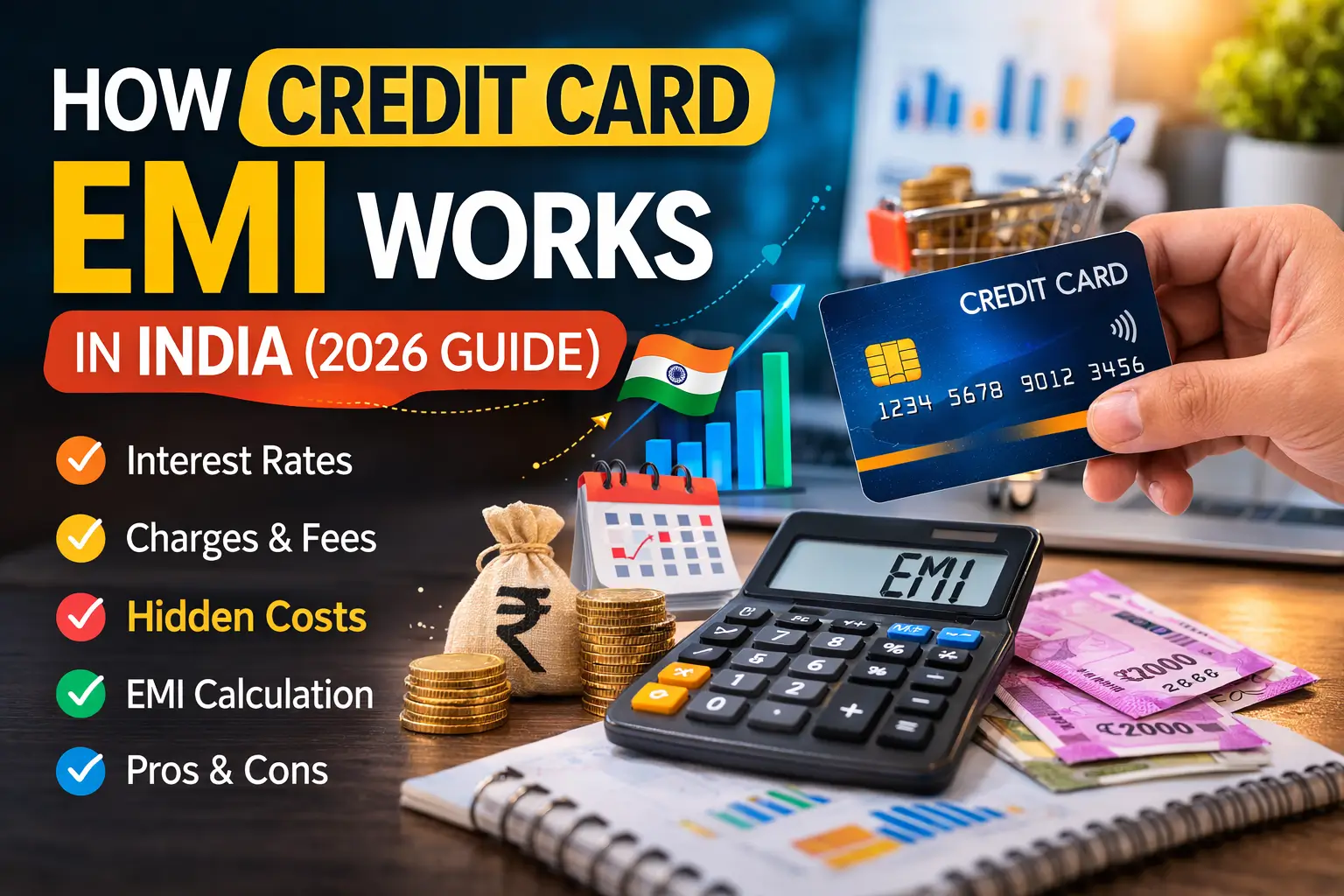
How credit card EMI works in India is a common question for people who want to convert large purchases into monthly installments. Credit card EMI allows cardholders to split payments for expensive products like smartphones, laptops, appliances, and travel bookings into smaller monthly EMIs instead of paying the full amount in one billing cycle.
Credit cards have become one of the most widely used financial tools in India. Whether you are buying electronics, booking travel, or shopping online, credit cards make payments quick and convenient.
One feature that makes credit cards even more attractive is the Credit Card EMI option. This feature allows users to convert large purchases into smaller monthly installments instead of paying the entire amount in one billing cycle.
Understanding how credit card EMI works in India helps borrowers avoid hidden charges and choose the right repayment option for their purchases.
What is Credit Card EMI?
Credit Card EMI is a repayment facility that allows cardholders to convert their purchases into Equated Monthly Installments (EMIs).
Instead of paying the full purchase amount at once, the bank divides the amount into smaller payments that you repay every month.
For example, if you purchase a smartphone worth ₹50,000, you can convert the transaction into a 6-month EMI plan instead of paying the entire amount in the next billing cycle.
Many banks in India including HDFC Bank, ICICI Bank, SBI, and Axis Bank offer EMI conversion for eligible transactions.
You can also explore our guide on
Best Credit Cards in India
to find credit cards that provide better EMI features.
How Credit Card EMI Works
Understanding how credit card EMI works in India is important before choosing this repayment option.
The process usually works like this:
- You make a purchase using your credit card.
- The transaction becomes eligible for EMI conversion.
- You select the EMI tenure (3, 6, 9, or 12 months).
- The bank converts the purchase into monthly installments.
- The EMI amount is added to your credit card bill every month.
Many e-commerce platforms also allow customers to select EMI directly during checkout.
According to the
Reserve Bank of India,
credit card usage and digital payments have increased significantly across India in recent years.
Types of Credit Card EMI
There are generally two types of credit card EMI options available.
Regular EMI
In a regular EMI plan, banks charge interest on the purchase amount. The interest rate depends on the bank and the credit card used.
No Cost EMI
In No Cost EMI offers, the interest is adjusted through product discounts or paid by the merchant.
However, processing fees or GST may still apply in some cases.
Credit Card EMI Interest Rates
When learning how credit card EMI works in India, it is important to compare interest rates offered by different banks.
Interest rates on credit card EMIs usually range between:
- 12% – 24% per year
The exact rate depends on several factors including:
- Your credit card issuer
- Your credit history
- The EMI tenure selected
If your credit score is good, banks may offer better terms.
You can read our guide on improving your credit score here:
How to Improve CIBIL Score Fast.
Example of Credit Card EMI Calculation
Let’s look at a simple example to understand how credit card EMI works in India.
Suppose you purchase a laptop worth ₹60,000 and convert it into a 6-month EMI plan with an interest rate of 18%.
| Purchase Amount | ₹60,000 |
|---|---|
| Interest Rate | 18% |
| Tenure | 6 Months |
| Approx EMI | ₹10,600 |
This example clearly shows how credit card EMI works in India and how interest increases the total repayment amount.
Hidden Charges in Credit Card EMI
Before converting your purchase into EMI, you should always check the additional charges involved.
- Processing fees
- GST on interest
- Late payment penalties
- Foreclosure charges
Understanding these costs helps you avoid paying more than expected.
Advantages of Credit Card EMI
- Instant financing without documentation
- Convenient repayment through monthly installments
- No need to apply for a separate loan
- Many banks offer No Cost EMI on electronics and gadgets
Disadvantages of Credit Card EMI
- Interest rates are usually higher than personal loans
- Processing fees and GST may apply
- Reduces available credit limit on the card
- Late payments may affect your credit score
Credit Card EMI vs Personal Loan
Many borrowers compare credit card EMI with personal loans before choosing a financing option.
You can read our detailed comparison here:
Personal Loan vs Credit Card EMI – Which Is Better
| Feature | Credit Card EMI | Personal Loan |
|---|---|---|
| Approval Time | Instant | Few hours to 2 days |
| Interest Rates | Higher | Usually lower |
| Loan Amount | Limited to credit limit | Higher loan amounts |
When Should You Use Credit Card EMI?
- When buying gadgets or electronics
- When a No Cost EMI offer is available
- When you need instant financing
- When the purchase amount is small
Now that you understand how credit card EMI works in India, you can decide whether EMI is the right financing option for your purchases.
Frequently Asked Questions
Is Credit Card EMI a good option?
Credit card EMI can be useful when used responsibly. However, high interest rates can increase the overall cost if the tenure is long.
Does credit card EMI affect credit score?
Yes. Paying EMIs on time can improve your credit score, while missed payments can reduce it.
Is No Cost EMI really free?
Not always. Sometimes the interest is included in the product price or adjusted through discounts.
Related Financial Guides
If you want to learn more about credit cards, loans, and improving your credit score, read these helpful guides:
-
Best Credit Cards in India
– Compare top credit cards with cashback, rewards, and EMI benefits. -
How to Improve CIBIL Score Fast
– Practical tips to increase your credit score quickly. -
Personal Loan vs Credit Card EMI – Which Is Better
– Detailed comparison of interest rates and repayment options. -
Best Personal Loan Apps in India
– Safe loan apps that offer quick personal loans. -
Personal Loan Interest Rates in India
– Compare the latest personal loan interest rates.