How Credit Card Limit Works in India (2026 Guide): How Banks Decide Your Credit Limit
How credit card limit works in India is a common question for people applying for their first credit card. Many cardholders are surprised when banks approve a credit card but assign a much lower limit than expected.
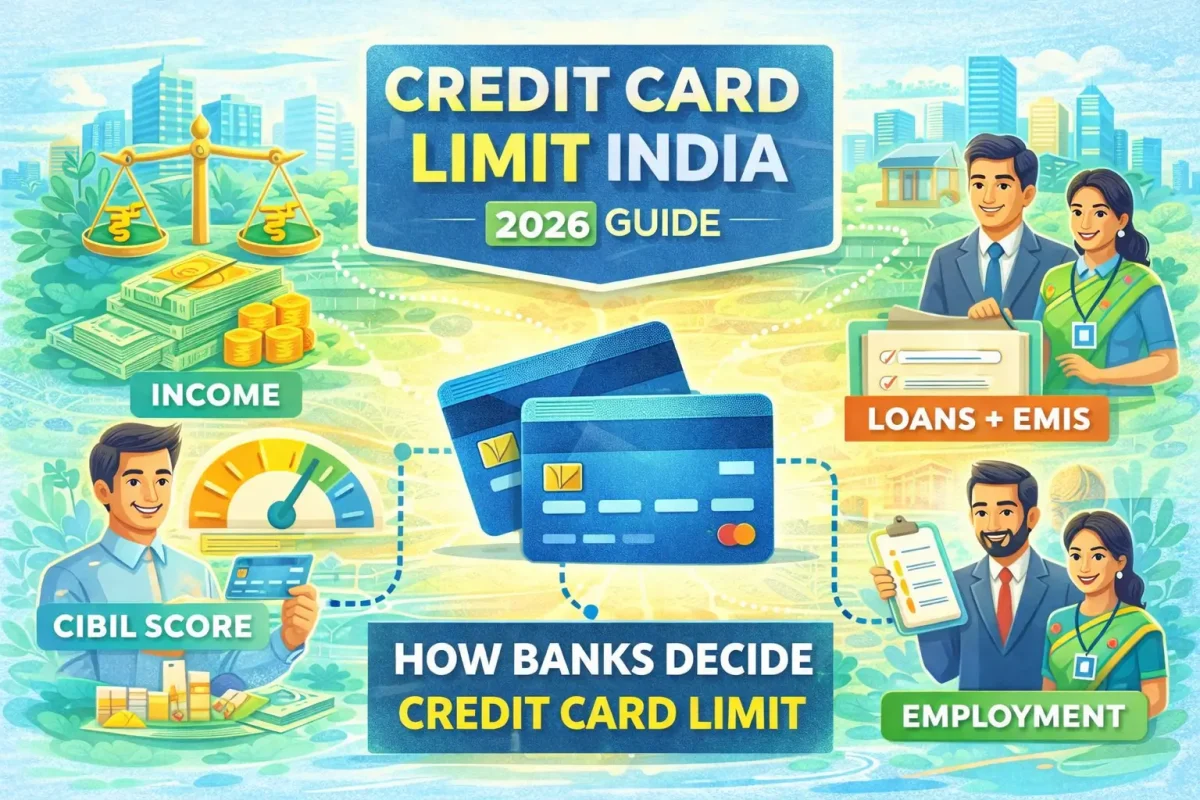
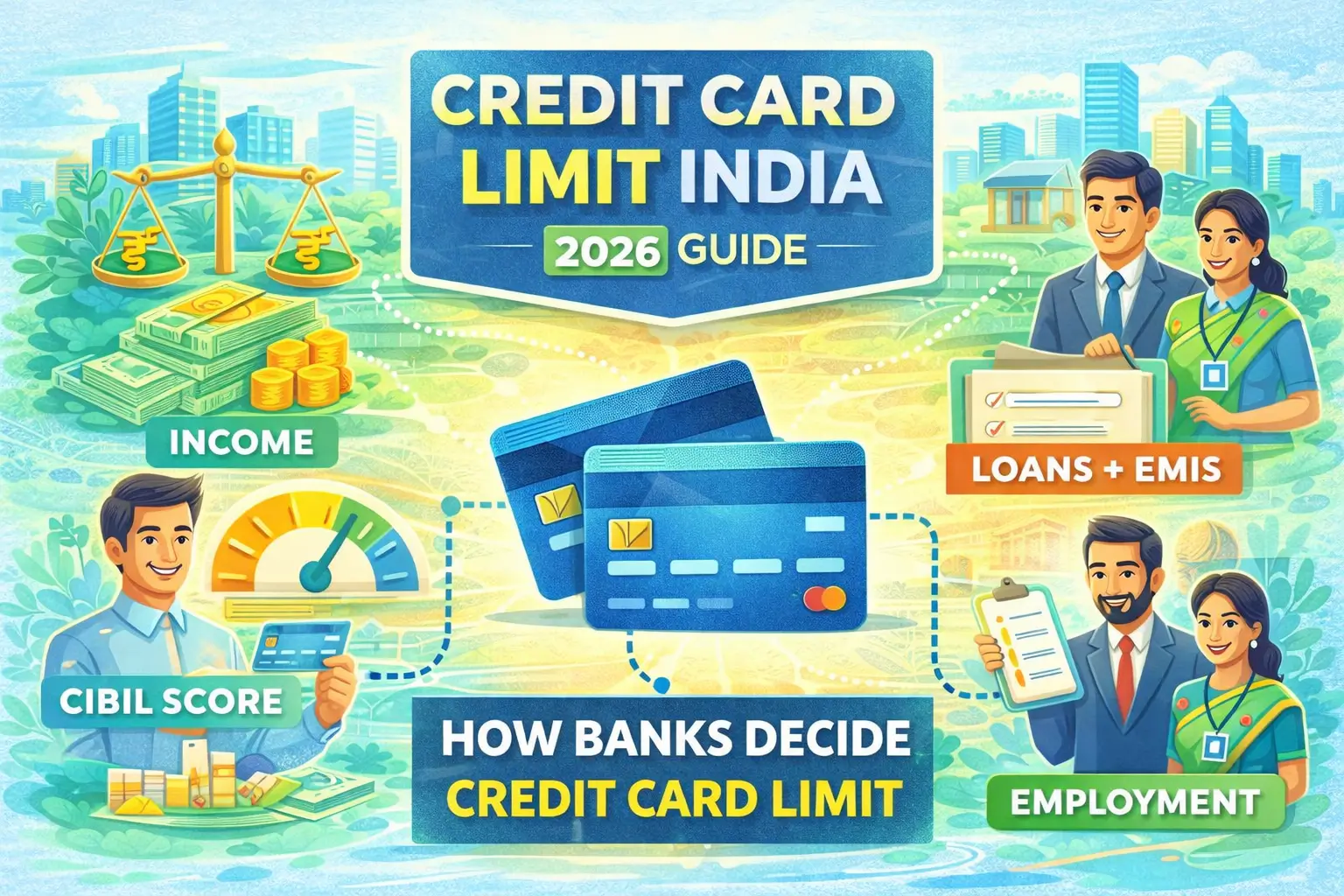
Banks determine your credit card limit based on several financial factors including income, credit history, existing loans, and repayment behavior. Understanding how this process works can help you improve your chances of getting a higher limit.
In this guide, we explain how credit card limit works in India, how banks calculate your credit limit, and practical ways to increase it over time.
What Is a Credit Card Limit?
A credit card limit is the maximum amount of money you can spend using your credit card. This limit is assigned by the bank or card issuer when your credit card application is approved.
For example, if your credit card limit is ₹1,00,000, you can spend up to that amount using the card before repaying the outstanding balance.
Your available credit limit reduces as you make purchases and increases again when you pay your credit card bill.
How Credit Card Limit Works in India
Understanding how credit card limit works in India requires looking at how banks assess risk. Since credit cards are unsecured loans, banks evaluate your financial stability before deciding your spending limit.
The limit is typically calculated as a multiple of your monthly income and adjusted based on your credit profile.
For example:
- Low income profile → lower credit limit
- High income + strong credit history → higher credit limit
- New credit users → moderate limit
Banks continuously monitor your usage and repayment behavior to decide whether your limit should be increased or reduced.
Factors Banks Use to Decide Credit Card Limit
Several important factors determine the credit limit assigned to your credit card.
Monthly Income
Your salary or monthly income is one of the most important factors. Banks typically assign limits based on a multiple of your monthly earnings.
For example:
| Monthly Income | Typical Credit Limit |
|---|---|
| ₹20,000 – ₹40,000 | ₹20,000 – ₹60,000 |
| ₹40,000 – ₹80,000 | ₹60,000 – ₹1,50,000 |
| ₹80,000+ | ₹1,50,000 – ₹5,00,000+ |
CIBIL Score
Your credit score plays a major role in determining your credit limit.
A higher credit score shows responsible borrowing behavior and increases your chances of getting a higher credit limit.
You can read our detailed guide here:
How Much CIBIL Score Is Required for Personal Loan
Existing Loans and EMIs
Banks also evaluate your current financial obligations such as:
- Personal loans
- Home loans
- Car loans
- Other credit cards
If your EMI obligations are already high, banks may offer a lower credit card limit to reduce lending risk.
Employment Stability
Stable employment increases your chances of receiving a higher credit card limit in India.
For example:
- Government employees
- Employees at large corporations
- Professionals with long work history
These profiles often receive higher credit limits.
Types of Credit Card Limits
Many credit cards offer different types of limits depending on the card features.
- Total Credit Limit – Maximum spending allowed
- Available Credit Limit – Remaining limit after spending
- Cash Withdrawal Limit – Portion of the limit usable for ATM withdrawals
Cash withdrawal limits are usually lower and may also include higher interest charges.
How to Increase Your Credit Card Limit
If your current limit is too low, you can increase it over time by following a few strategies.
- Pay your credit card bills on time
- Maintain low credit utilization
- Use your credit card regularly
- Avoid missing payments
- Request a credit limit increase after 6–12 months
Banks often increase limits automatically if they see responsible usage.
What Is Credit Utilization Ratio?
Credit utilization refers to the percentage of your credit limit that you are currently using.
For example:
- Credit limit: ₹1,00,000
- Spending: ₹30,000
- Utilization ratio: 30%
Financial experts recommend keeping utilization below 30% to maintain a healthy credit score.
Role of RBI in Credit Card Regulations
Credit cards in India are regulated by the
Reserve Bank of India (RBI).
RBI ensures transparency in credit card charges, billing practices, and consumer protection guidelines.
Final Thoughts
Understanding how credit card limit works in India helps you manage your credit responsibly and improve your financial profile.
Banks determine credit limits based on income, credit score, existing loans, and repayment behavior. Over time, responsible usage can help you qualify for higher credit limits and better financial products.
If you plan to apply for a credit card, maintaining a good credit history and stable income can significantly improve your chances of receiving a higher credit limit.
Frequently Asked Questions
How do banks decide credit card limit in India?
Banks decide credit card limits based on factors such as income, CIBIL score, existing loans, employment stability, and repayment history.
What is a good credit card limit?
A good credit card limit depends on your income, but many banks provide limits ranging from ₹50,000 to ₹5,00,000 or more for eligible customers.
Can I increase my credit card limit?
Yes, most banks allow credit limit increases after several months of responsible usage and timely repayments.
Does credit card limit affect credit score?
Yes, a higher credit limit can help improve your credit score if you maintain a low credit utilization ratio.