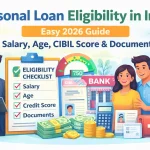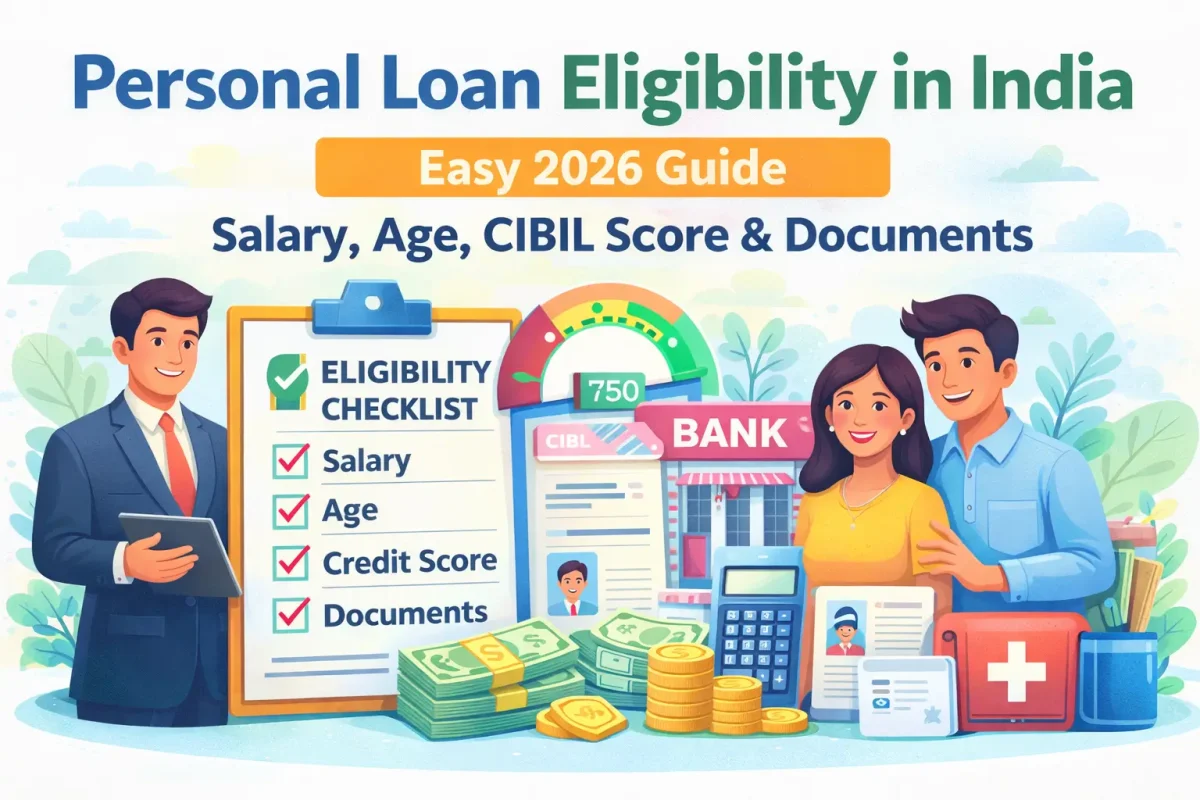
Personal Loan Eligibility in India (2026 Guide): Salary, Age, CIBIL Score & Documents
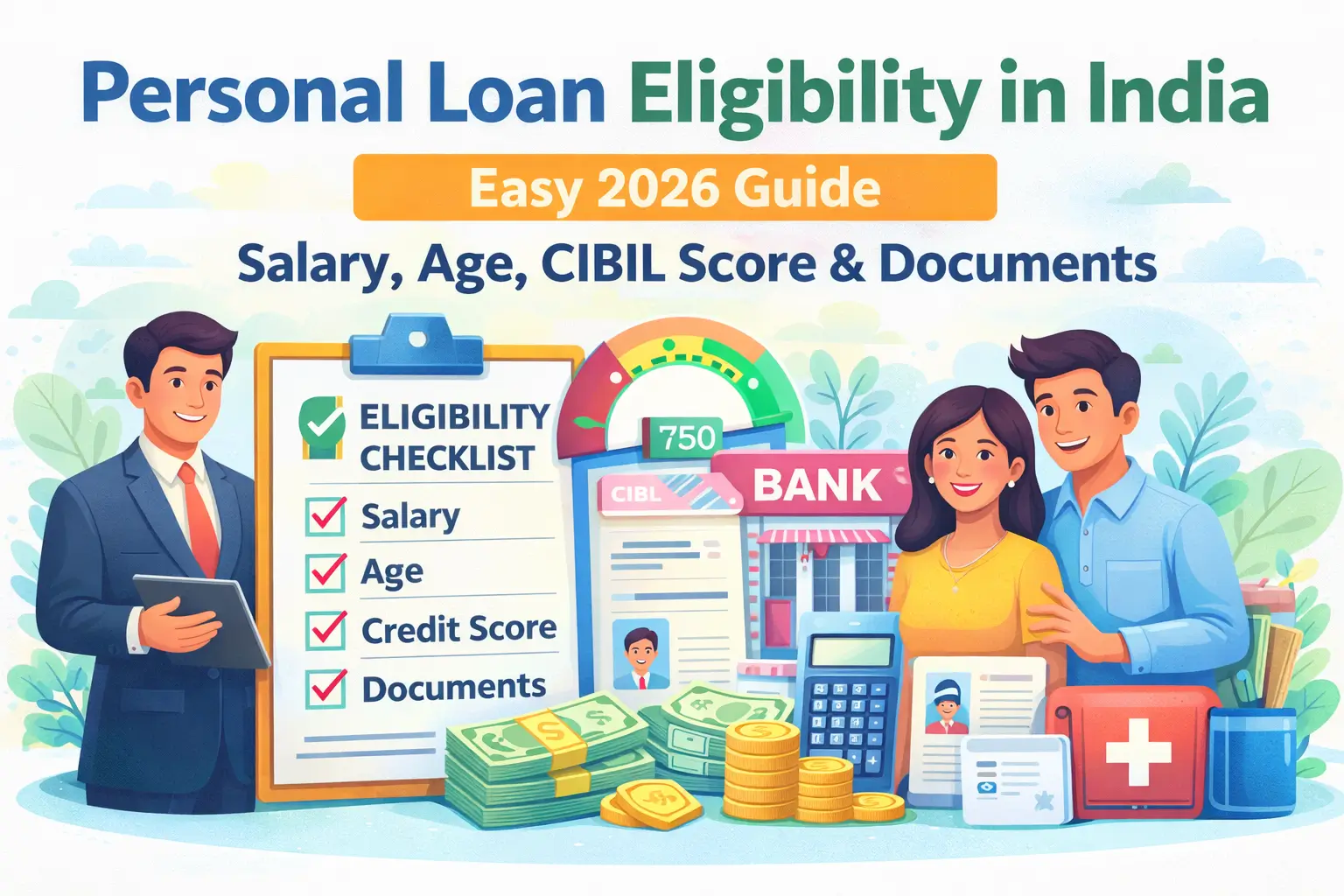
Understanding personal loan eligibility in India is the first step before applying for a loan. Banks and NBFCs evaluate several factors such as income, age, employment stability, and credit score before approving a personal loan application.
If you know the eligibility criteria in advance, you can improve your chances of loan approval and avoid unnecessary rejections. In this guide, we explain personal loan eligibility in India, salary requirements, age limits, credit score expectations, and documents required in 2026.
You can also explore our detailed comparison of lenders in our guide:
Best Personal Loan Apps in India.
What Is Personal Loan Eligibility?
Personal loan eligibility refers to the criteria used by banks and financial institutions to determine whether a borrower qualifies for a loan. Lenders assess multiple financial factors to evaluate the borrower’s ability to repay the loan on time.
Common factors used to determine personal loan eligibility in India include:
- Monthly income
- Age of the applicant
- CIBIL or credit score
- Employment status
- Existing debts
- Loan repayment history
Meeting these requirements increases the chances of getting faster loan approval and better interest rates.
Minimum Salary Requirement for Personal Loan in India
One of the most important factors in personal loan eligibility in India is your monthly income. Most lenders require a minimum salary to ensure that borrowers can comfortably repay the EMI.
Typical salary requirements may include:
- ₹15,000 to ₹20,000 monthly salary in smaller cities
- ₹20,000 to ₹25,000 monthly salary in metro cities
- Higher salary for larger loan amounts
Higher income usually increases the maximum loan amount you can borrow.
If you are unsure how much loan you can manage, read:
Personal Loan Interest Rates in India.
Age Limit for Personal Loan Eligibility
Age is another important factor lenders consider when evaluating personal loan eligibility in India. Most lenders prefer borrowers who are in their working years with stable income.
| Applicant Type | Minimum Age | Maximum Age |
|---|---|---|
| Salaried Employees | 21 Years | 60 Years |
| Self-Employed Individuals | 21 Years | 65 Years |
Applicants closer to retirement age may receive shorter loan tenures.
CIBIL Score Requirement for Personal Loan
Your credit score plays a major role in determining personal loan eligibility in India. A good credit score shows lenders that you have a strong repayment history.
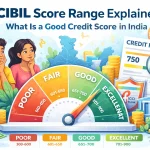
Typical CIBIL score requirements include:
- 750+ – Excellent approval chances
- 700 to 750 – Good approval chances
- 650 to 700 – Moderate approval chances
- Below 650 – Higher rejection risk
A higher credit score may also help you secure lower interest rates.
You can improve your credit score using strategies explained in our guide:
How to Improve CIBIL Score Fast.
Employment Criteria for Personal Loan
Lenders also evaluate the applicant’s employment stability while checking personal loan eligibility in India.
Salaried Employees
- Minimum 6–12 months work experience
- Stable employer or organization
- Consistent monthly income
Self-Employed Individuals
- Business operating for at least 2–3 years
- Stable income proof
- Income tax returns
Stable employment improves the chances of personal loan approval significantly.
Documents Required for Personal Loan in India
To complete the personal loan application process, borrowers must provide several documents.
Typical documents required for personal loan eligibility in India include:
- PAN card
- Aadhaar card
- Salary slips (last 3 months)
- Bank statements
- Income tax returns (for self-employed)
- Employment proof
Submitting complete and accurate documents can speed up loan approval.
Factors That Affect Personal Loan Eligibility
Several additional factors influence personal loan eligibility in India.
- Existing EMIs or loan obligations
- Debt-to-income ratio
- Credit card usage
- Loan repayment history
- Employer reputation
Keeping your existing debt low and maintaining a strong credit profile can improve eligibility.
How to Increase Personal Loan Eligibility
If you want to improve your personal loan eligibility in India, consider the following tips:
- Improve your CIBIL score
- Reduce existing loan obligations
- Maintain stable employment
- Add a co-applicant if required
- Choose a longer repayment tenure
These strategies can increase both loan approval chances and borrowing limits.
Maximum Personal Loan Amount You Can Get
The maximum loan amount depends on income and credit profile. Many lenders provide personal loans ranging from ₹50,000 to ₹40 lakh depending on eligibility.
Your EMI capacity generally determines the loan amount you qualify for.
Use our guide to understand loan repayment better:
How Credit Card EMI Works in India.
Role of RBI in Personal Loans
Personal loans in India are regulated by the
Reserve Bank of India (RBI).
RBI ensures that banks and NBFCs follow fair lending practices and transparent loan policies.
Borrowers should always choose lenders that operate under RBI guidelines.
Final Thoughts
Understanding personal loan eligibility in India helps borrowers prepare before applying for a loan. Factors such as income, age, credit score, and employment stability play an important role in determining loan approval.
Before applying, check your eligibility, improve your credit score if necessary, and choose a reliable lender. Proper preparation can increase your chances of fast personal loan approval.
Frequently Asked Questions
What is the minimum salary for a personal loan in India?
Most lenders require a minimum monthly salary of ₹15,000 to ₹25,000 depending on the city and lender policies.
What CIBIL score is required for a personal loan?
A CIBIL score above 750 is generally considered ideal for personal loan approval.
Can I get a personal loan with a low credit score?
Some lenders offer loans to borrowers with lower credit scores, but interest rates may be higher.
Can self-employed individuals apply for personal loans?
Yes, self-employed individuals can apply if they provide income proof and business documentation.