What is APR in Credit Cards? Avoid Costly Mistakes (Complete 2026 Guide)
What is APR in credit cards? APR stands for Annual Percentage Rate and it represents the yearly interest charged if you carry an outstanding balance on your credit card.
Most Indian users focus on cashback and rewards but ignore APR — which can significantly increase the total amount you repay.
APR directly affects how much extra money you pay if you don’t clear your full bill.
Understanding APR can save you thousands of rupees every year.
In this detailed 2026 guide, we explain APR in simple language — especially for Indian credit card users.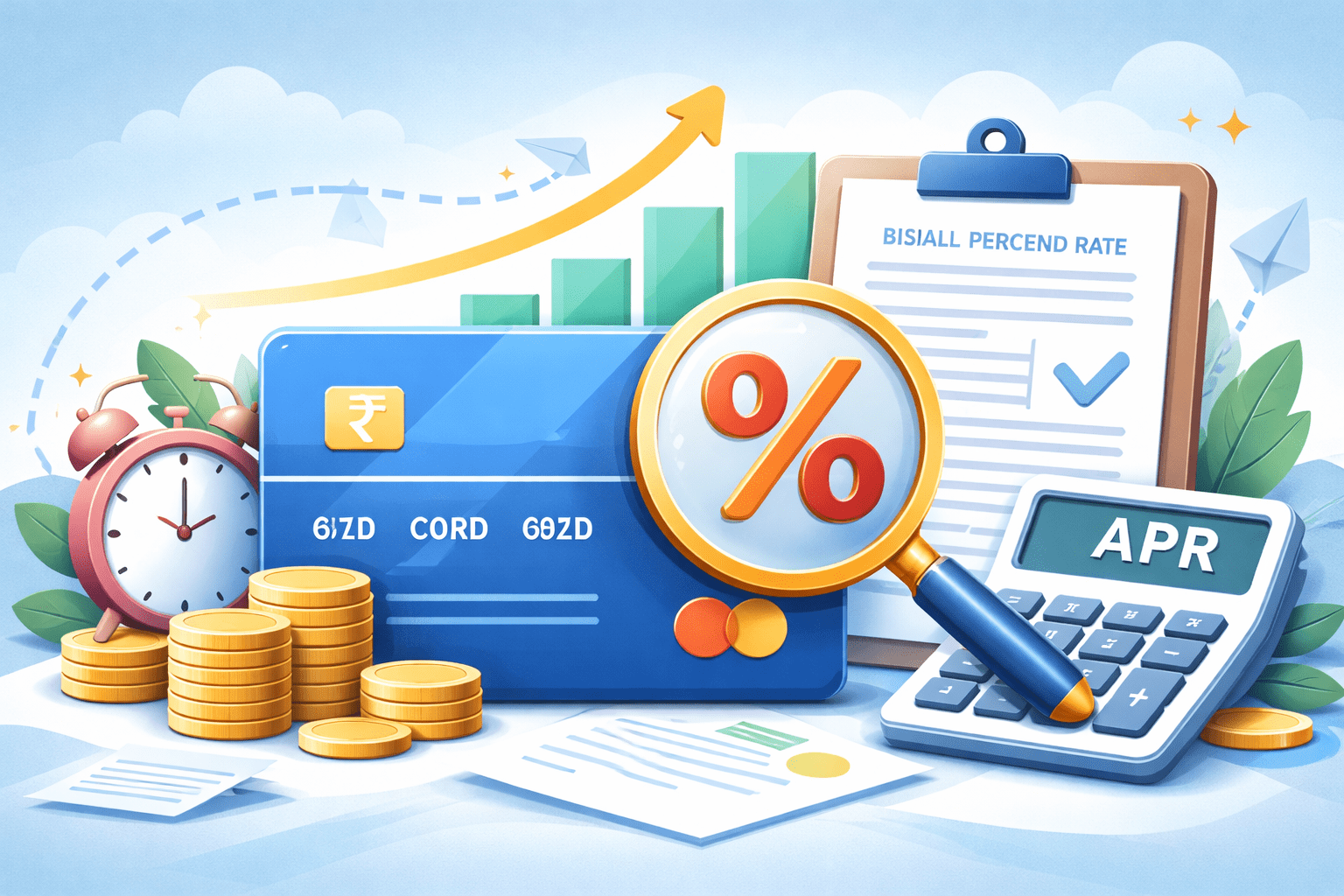
Understanding what is APR in credit cards is essential before applying for any new credit card in India.
APR decides how expensive your card becomes when you carry a balance even for a short time.
What is APR in Credit Cards and What Does It Mean?
APR stands for Annual Percentage Rate.
It represents the yearly interest rate charged on outstanding credit card balances.
In other words, what is APR in credit cards? It’s the annualized cost of borrowing when you don’t pay your full statement amount.
In simple words:
- If you don’t pay your full credit card bill,
- The bank charges interest,
- That yearly interest rate is called APR.
In India, most credit card APRs range between 30% to 48% per year,
which makes credit card interest one of the most expensive forms of borrowing.
APR vs Interest Rate – Are They Same?
Many people think APR and interest rate are different.
For most credit cards, they are closely related because:
- APR represents yearly interest
- Credit card interest is calculated monthly (and often tracked daily)
- APR is the annual representation of the monthly rate
For example:
- Monthly interest = 3.5%
- APR ≈ 3.5% × 12 = 42%
That means if you carry balance for a year, you may pay around 42% interest.
How APR is Calculated in Credit Cards
Banks usually calculate credit card interest daily but apply it monthly.
Here is the simplified formula:
Daily Interest = (APR ÷ 365) × Outstanding Balance
Let’s take an example:
- Outstanding balance = ₹50,000
- APR = 42%
- Daily interest rate = 42 ÷ 365 ≈ 0.115%
Daily interest = ₹50,000 × 0.115% = ₹57.5 per day
If unpaid for 30 days → ₹1,725 approx interest.
That’s how quickly credit card debt grows.
If you were searching what is APR in credit cards and how banks calculate it, this daily formula is the key.
For official updates and consumer guidelines, you can also refer to the
Reserve Bank of India (RBI) website.
Why Credit Card APR is So High in India
Credit cards are unsecured loans. That means:
- No collateral
- Instant approval
- Flexible spending
Because of higher risk to banks, APR is higher compared to:
- Home loans (8–10%)
- Car loans (9–12%)
- Personal loans (10–20%)
Credit card APR can go up to 48% annually, which is why understanding what is APR in credit cards matters so much.
When Do You Actually Pay APR?
You pay credit card APR only when:
- You do not pay full statement amount
- You pay only minimum due
- You use EMI conversion
- You withdraw cash from ATM
If you pay your total bill before due date — you pay zero interest.
What Happens If You Pay Only Minimum Due?
Minimum due is usually 5% of your total bill.
Many people think paying minimum due avoids interest — that’s wrong.
Example:
- Total bill = ₹40,000
- Minimum due = ₹2,000
- You pay ₹2,000
- Interest charged on remaining ₹38,000
Interest keeps compounding every month until full payment.
This is exactly why people ask what is APR in credit cards — because it can quietly become very expensive.
Different Types of APR
Credit cards may have different APR types:
1. Purchase APR
Applied to regular purchases.
2. Cash Advance APR
Applied when you withdraw cash. Usually higher than purchase APR.
3. EMI APR
Applied when converting purchases into EMI.
4. Penalty APR
Applied if you miss payments repeatedly.
APR vs Credit Card Rewards – Which Matters More?
Many people focus only on cashback and ignore APR.
But if you carry balance, high APR can cancel all rewards.
Example:
- Cashback earned = ₹1,000
- Interest paid = ₹3,000
- Net loss = ₹2,000
APR matters more than rewards if you do not pay full balance.
How to Reduce Impact of APR
- Pay full statement every month
- Avoid cash withdrawals
- Convert large expenses to lower-interest borrowing if needed
- Maintain an emergency fund
- Keep credit utilization below 30%
Is APR Negotiable?
Yes, sometimes banks reduce interest for:
- Long-term customers
- High credit score (750+)
- Strong repayment history
You can call customer care and request APR review.
APR and Credit Score Connection
APR itself doesn’t affect your credit score.
But carrying balance and missing payments does.
If you struggle with high APR debt, read:
How to Improve CIBIL Score Fast
You may also want to read:
Best Cashback Credit Cards in India (2026)
Real-Life Scenario (Indian Context)
Rahul uses his credit card heavily and pays only minimum due.
His outstanding grows from ₹30,000 to ₹52,000 within 8 months due to APR.
Meena pays full amount every month.
She enjoys cashback without paying any interest.
Same card. Different behavior. Huge difference in cost.
Now that you understand what is APR in credit cards, you can make smarter financial decisions and avoid unnecessary interest.
FAQs
Is 42% APR high?
How to avoid paying APR?
Does EMI have APR?
Disclaimer: Credit card terms differ by bank. APR ranges and calculation methods may vary.
Always verify details with official bank website before applying.